Email still pays the bills.
Social reach keeps shrinking, ad costs keep climbing, and AI search is swallowing clicks that used to land on your site. Your email list is the one channel you actually own. Nobody can change the algorithm on it overnight.
But here's the problem. Picking an email platform in 2026 is harder than it was two years ago. Mailchimp cut its free plan to 250 contacts. Klaviyo moved to "active profile" billing. Kit raised its paid prices. And every tool now claims to have an AI assistant that writes your campaigns for you.
So we did the boring part. We went through the pricing pages, tested what each tool is genuinely good at, and wrote down who should (and shouldn't) use each one. Whether you run a Shopify store, a B2B service company or a newsletter, you'll know which tool fits by the end of this guide.
What Is an Email Marketing Tool (and Why It Matters More in 2026)?
An email marketing tool is software that lets you collect subscribers, send campaigns, and trigger automated emails based on what people do. Think welcome series, abandoned cart reminders, post-purchase follow-ups and win-back flows.
The good ones also handle the stuff you never see: deliverability, list hygiene, consent tracking and reporting.
Why it matters right now
• You own the audience. Followers belong to the platform. Subscribers belong to you.
• Automation does the selling while you sleep. A well-built abandoned cart flow often brings in more revenue than a month of one-off campaigns.
• Inbox rules got stricter. Gmail and Yahoo now expect authenticated domains (SPF, DKIM, DMARC), one-click unsubscribe and low spam complaint rates. A decent platform makes this easy. A bad setup gets you sent straight to spam.
• First-party data is gold. With cookies fading out, the data you collect through email signups, quizzes and purchases powers everything from performance marketing to personalisation on your site.
In short, your email tool isn't just a newsletter sender anymore. It's part of your growth stack, sitting right next to your store, your CRM and your SEO strategy.
How We Picked These Tools
We didn't rank tools by how many features they list. We looked at what actually moves revenue for the kinds of businesses we work with at Radianzz.
• Pricing at real list sizes. Not just the starting price. What do you pay at 5,000 and 10,000 contacts?
• Automation depth. Can you build branching flows, or only basic autoresponders?
• Ecommerce and CRM integrations. Does it plug into Shopify, WooCommerce, BigCommerce or your CRM without a mess of Zapier steps?
• Deliverability and compliance. Domain authentication, list cleaning, and clear sending limits.
• Ease of use. Can a marketer without a developer launch a campaign this afternoon?
• AI features that save time. Subject line help, segment suggestions and content drafts, not gimmicks.
Pricing below is in USD, billed monthly, and reflects each vendor's public pricing as of November 2026. Vendors change prices often, so always confirm on the live pricing page before you commit.
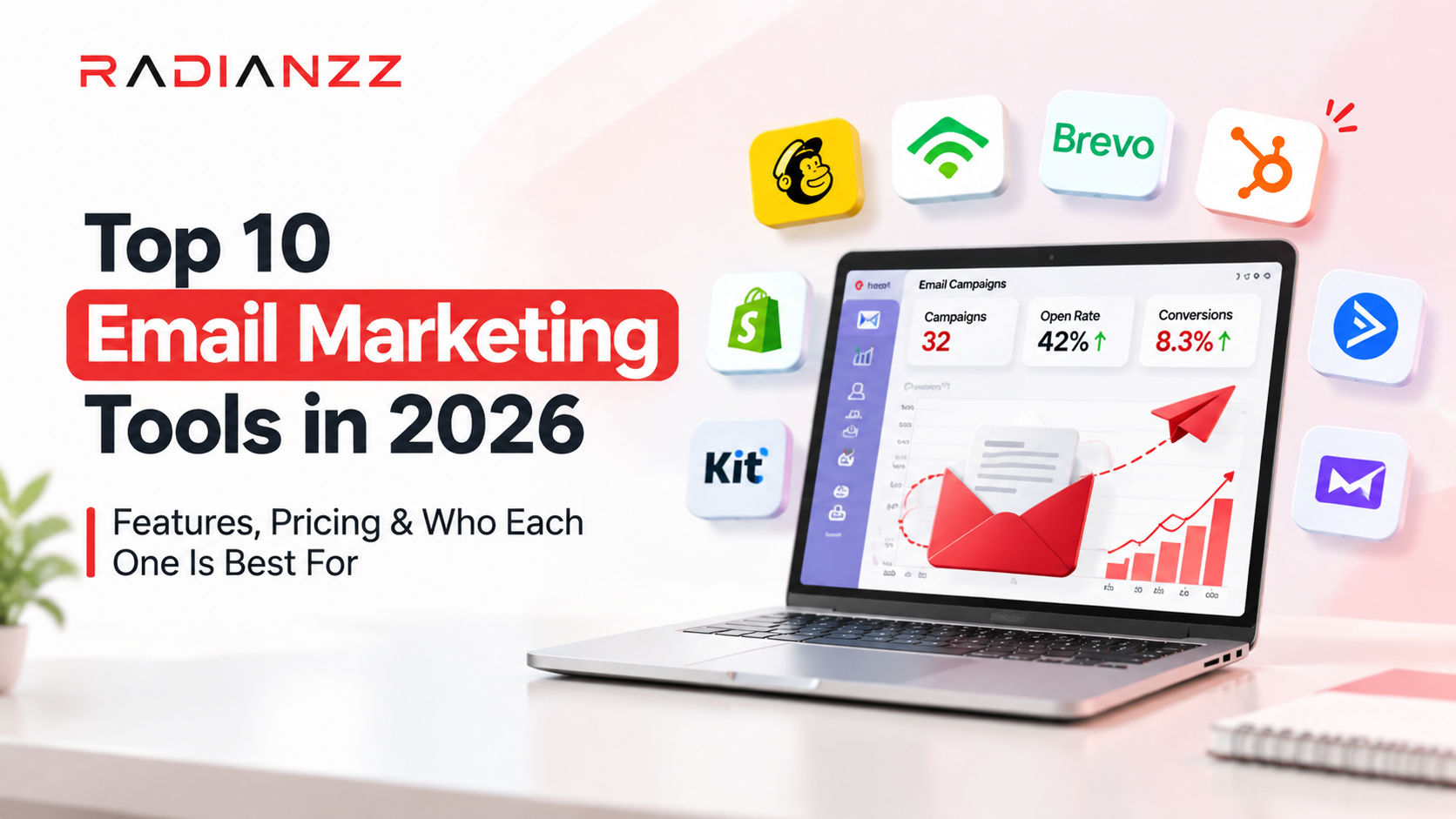
The Top 10 Email Marketing Tools in 2026
1. Klaviyo: Best for Shopify and Ecommerce Brands
If you sell online, Klaviyo is the tool most growing stores end up on. It pulls in every order, product view and cart event from your store, so you can segment people by what they actually buy, not just whether they opened an email.
• Standout features: Pre-built ecommerce flows (abandoned cart, browse abandonment, post-purchase, win-back), predictive analytics like expected next order date, built-in SMS, reviews and an AI assistant that builds campaigns and flows.
• Pricing: Free for up to 250 active profiles and 500 emails a month. The Email plan starts at $20/month for 500 profiles and 5,000 sends.
• Pros: Deepest Shopify integration on the market, revenue attribution per email, strong segmentation.
• Cons: Since 2025 it bills on every active profile in your account, not just the people you email. Costs climb fast past 10,000 contacts.
• Best for: DTC and Shopify Plus stores doing steady monthly revenue.
2. Mailchimp: Best for Beginners Who Want Everything in One Place
Mailchimp is still the name most people know. The editor is friendly, the templates look good out of the box, and it covers email, SMS, landing pages and basic automation.
• Standout features: Drag-and-drop builder, AI subject line and content help, customer journey builder, predictive segments on higher plans.
• Pricing: Free plan now covers only 250 contacts and 500 sends (cut in January 2026). Essentials from $13/month, Standard from $20/month, Premium from $350/month.
• Pros: Easy to learn, huge integration library, solid reporting.
• Cons: Gets expensive as your list grows. The free plan is now very limited. Advanced automation needs Standard or higher.
• Best for: Small businesses and first-time email marketers.
3. Brevo: Best Budget Pick for Growing Lists
Brevo (formerly Sendinblue) charges for emails you send, not contacts you store. If you have a big list but don't email it every day, that pricing model can save you a lot of money.
• Standout features: Email, SMS and WhatsApp campaigns, transactional email, a built-in CRM, live chat and the Aura AI email builder.
• Pricing: Free forever with 300 emails a day and up to 100,000 contacts. Starter from $9/month, Standard from $18/month.
• Pros: Very affordable at scale, multichannel in one dashboard, transactional email included.
• Cons: The free plan's daily cap is tight, and Brevo branding stays on lower plans unless you pay to remove it.
• Best for: Small to mid-sized businesses, B2B service brands and anyone who wants WhatsApp marketing alongside email. (We break WhatsApp down further in our WhatsApp Business API automation guide.)
4. ActiveCampaign: Best for Advanced Automation
ActiveCampaign is where marketers go when they want proper if/then logic. Lead scoring, branching journeys, site tracking and a sales CRM all sit in one platform.
• Standout features: Visual automation builder with hundreds of templates, lead and contact scoring, predictive sending, CRM with deal pipelines, AI-assisted automation building.
• Pricing: Starter from $15/month (billed yearly) for 1,000 contacts. Plus from $49/month, Pro from $79/month, Enterprise from $145/month.
• Pros: Arguably the most flexible automation on this list. Great for B2B nurture and SaaS onboarding.
• Cons: Steeper learning curve. Starter caps each automation at 5 actions, so most teams really need Plus.
• Best for: B2B companies, SaaS, agencies and coaches running long sales cycles.
5. Omnisend: Best Klaviyo Alternative for Ecommerce
Omnisend gives you most of what ecommerce brands love about Klaviyo, with simpler pricing and ready-made automations you can switch on in minutes.
• Standout features: Pre-built ecommerce workflows, product recommendation blocks, web push notifications, SMS, popups and signup forms.
• Pricing: Free for 250 contacts and 500 emails a month. Standard from $16/month, Pro from $59/month. New customers since May 2026 need the Pro plan to buy SMS credits.
• Pros: Easy setup, strong Shopify, WooCommerce and BigCommerce integrations, 24/7 support.
• Cons: Reporting is less detailed than Klaviyo's. SMS is now locked to Pro for new accounts.
• Best for: Small and mid-sized online stores on WooCommerce, BigCommerce or Shopify.
6. MailerLite: Best for Simple, Clean Email on a Budget
MailerLite keeps things uncluttered. It's the tool we recommend to people who want good-looking newsletters and basic automation without a 40-tab dashboard.
• Standout features: Clean drag-and-drop editor, landing pages, website builder, automation workflows, paid newsletters and digital product sales.
• Pricing: MailerLite renamed its plans in June 2026. Free covers up to 250 subscribers. Comfort (formerly Growing Business) starts at $12/month and Power (formerly Advanced) at $25/month.
• Pros: Very easy to use, affordable, unlimited sends on paid plans.
• Cons: Free plan shrank this year. Account approval can be strict, and ecommerce features are lighter than Klaviyo or Omnisend.
• Best for: Startups, bloggers, local businesses and small service brands.
7. Kit (formerly ConvertKit): Best for Creators and Newsletters
Kit is built for people who sell what they know: courses, ebooks, coaching and paid newsletters. Tagging subscribers by interest is simple, and the creator network helps you grow through recommendations.
• Standout features: Visual automations, tag-based segmentation, landing pages, paid newsletters, digital product sales and a referral system.
• Pricing: The free Newsletter plan covers up to 10,000 subscribers but has no automations. Creator starts at $39/month and Pro at $79/month (both at 1,000 subscribers).
• Pros: One of the most generous free plans around. Excellent for audience-first businesses.
• Cons: Kit raised paid prices in 2026. Email designs are deliberately simple, so it's not ideal for heavy ecommerce.
• Best for: Creators, coaches, authors and personal brands.
8. HubSpot Marketing Hub: Best for CRM-Led Teams
HubSpot is more than an email tool. Your emails, website forms, sales pipeline and support tickets all live on the same contact record, which is gold for B2B teams.
• Standout features: Free CRM, email marketing, landing pages, lead scoring, Breeze AI tools, ads and social management, and deep reporting.
• Pricing: Free tools are available. Marketing Hub Starter's regular rate starts at $20 per seat per month (HubSpot often runs lower promo pricing for new customers). Professional starts at $800/month billed yearly with 3 seats.
• Pros: Sales and marketing in one system, excellent reporting, a huge app marketplace.
• Cons: The jump from Starter to Professional is steep, and onboarding fees can apply on higher tiers.
• Best for: B2B businesses, SaaS and companies that want marketing and sales to share one source of truth.
9. GetResponse: Best for Funnels, Webinars and Landing Pages
GetResponse bundles email with tools that most platforms make you buy separately: webinars, conversion funnels, a website builder and landing pages.
• Standout features: Unlimited email sends on every plan, AI email generator, conversion funnels, webinar hosting, and ecommerce tools on higher plans.
• Pricing: A free plan covers up to 500 contacts. Starter costs $19/month for 1,000 contacts on monthly billing, and yearly billing saves 18%.
• Pros: Great value if you'd otherwise pay for a separate webinar and funnel tool.
• Cons: Interface feels busier than newer tools, and SMS is limited to the Enterprise (MAX) tier.
• Best for: Coaches, course sellers, info-product businesses and lead-gen marketers.
10. Constant Contact: Best for Local Businesses and Events
Constant Contact has been around for decades, and it shows in the support. You can get live phone and chat help, which matters when you're a busy owner without a marketing team.
• Standout features: Email, SMS, social posting, event management, AI content tools and 300+ integrations.
• Pricing: No free plan, only a trial. Lite starts at $12/month, Standard at $35/month and Premium at $80/month (500 contacts). Prepaying for 12 months saves up to 15%.
• Pros: Excellent support, simple to use, strong for events and nonprofits.
• Cons: Automation is limited on Lite, and prices rise quickly as your list grows.
• Best for: Restaurants, clinics, nonprofits, gyms and other local businesses. If that's you, pair it with our guide to Google Business Profile optimization to get more local customers in the first place.
Quick Comparison: Email Marketing Tools 2026
Tool | Best for | Free plan | Paid plans from (USD/month) |
Klaviyo | Shopify and ecommerce | 250 profiles, 500 emails | $20 |
Mailchimp | Beginners, all-in-one | 250 contacts, 500 sends | $13 |
Brevo | Budget, big lists, WhatsApp | 300 emails/day, 100k contacts | $9 |
ActiveCampaign | Advanced automation, B2B | No (trial only) | $15 (billed yearly) |
Omnisend | Ecommerce on a budget | 250 contacts, 500 emails | $16 |
MailerLite | Simple newsletters | 250 subscribers | $12 |
Kit | Creators and newsletters | 10,000 subscribers | $39 |
HubSpot Marketing Hub | CRM-led B2B teams | Yes, limited tools | $20 per seat |
GetResponse | Funnels and webinars | 500 contacts | $19 |
Constant Contact | Local businesses, events | No (trial only) | $12 |
Starting prices are for the smallest list tier, billed monthly unless noted, as of November 2026.
How Radianzz Can Help Your Business With Email Marketing
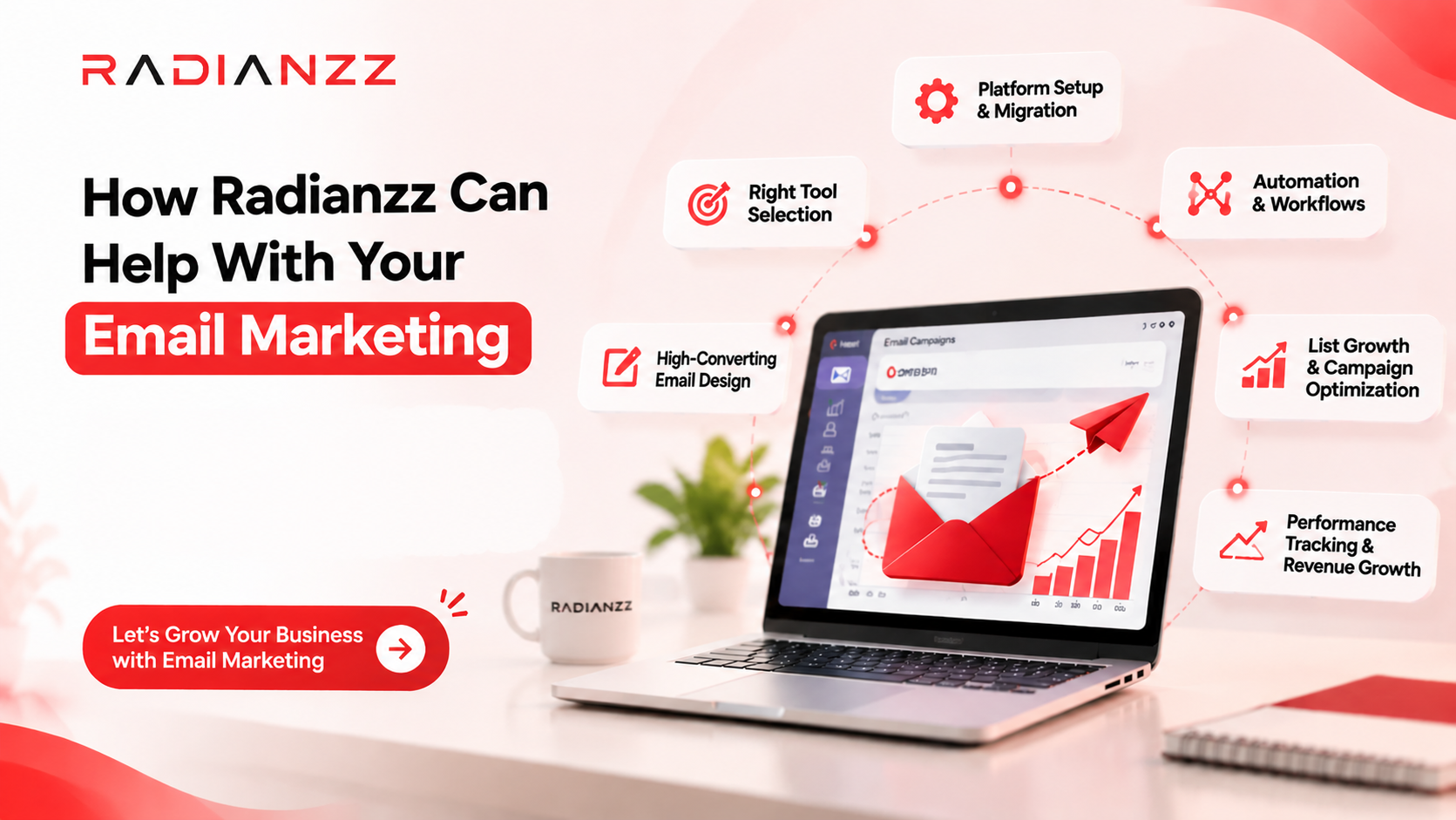
At Radianzz, we help businesses turn email marketing into a powerful growth and revenue channel. From selecting the right platform and setting up campaigns to designing engaging email templates, building automHow Radianzz Can Help Your Business With Email Marketingated customer journeys, managing subscriber lists, and optimizing campaign performance, we handle the entire process. Our team combines creative design, smart automation, and data-driven strategies to deliver personalized communication, nurture leads, strengthen customer relationships, and drive more conversions. Whether you're a startup, e-commerce brand, or established business, Radianzz helps you make every email count.