Introduction
For businesses planning this transition, Radianzz AI & Automation services provide a relevant starting point for thinking about assistants, workflow automation and practical business integrations. AI chatbots have moved well beyond scripted FAQ pop-ups. In 2026, businesses can deploy conversational systems that understand natural language, search approved company knowledge, qualify leads, update CRM records, assist customers and trigger workflows across connected tools.
The challenge is choosing the right type of platform. Foundation-model APIs such as OpenAI, Anthropic and Google Gemini give developers the building blocks for custom assistants. Customer-service products such as Intercom Fin and Zendesk package AI into helpdesk workflows. Platforms such as Botpress and Microsoft Copilot Studio sit between those approaches, offering agent-building tools, integrations and deployment options.
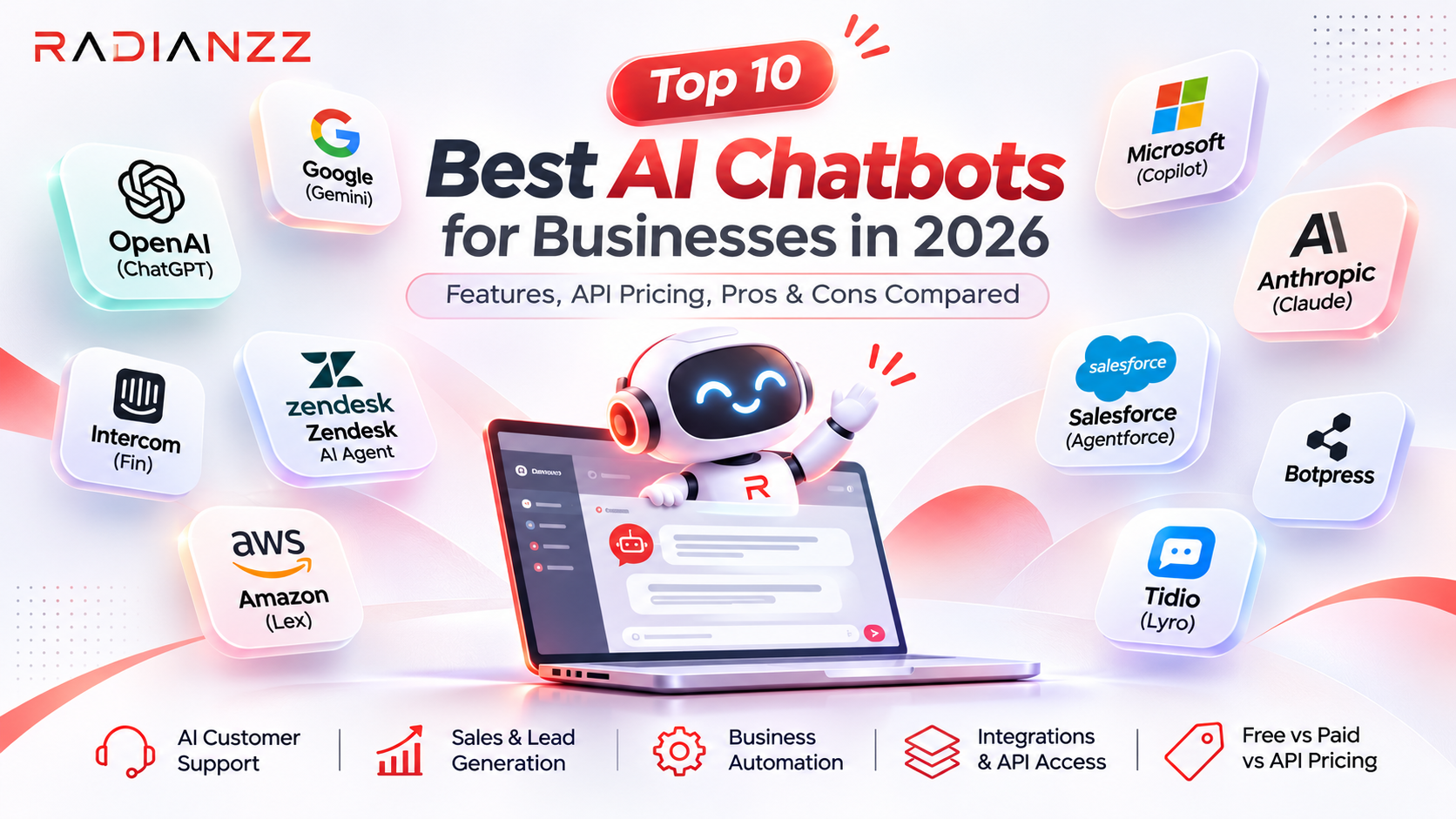
This guide compares ten relevant AI chatbot platforms for businesses in 2026. It covers features, business applications, API access, pricing structures, strengths and limitations. Prices are included in both US dollars and approximate Indian rupees wherever a public price is available. Where a provider does not publish a comparable price, that is stated rather than guessed.
Quick comparison: best AI chatbots in 2026
Platform | Best for | Pricing model | Indicative published price |
OpenAI API | Custom AI assistants | Token-based API | From $0.10 / ₹9.41 input per 1M tokens (GPT-6 Luna) |
Anthropic Claude API | Knowledge and document assistants | Token-based API | Claude Sonnet 5.5: $2 / ₹188.20 input per 1M tokens |
Google Gemini API | Cost-conscious custom AI apps | Token-based API | Model- and tier-specific; check live official rate card |
Microsoft Copilot Studio | Microsoft workflow agents | Copilot Credits | 25,000-credit pack: ₹16,640 / approx. $176.83 |
Salesforce Agentforce | CRM and sales automation | Credits / conversations | Published options vary by edition and contract |
Zendesk AI Agents | Customer support teams | Suite subscription / AI usage | Suite Team from $55 / approx. ₹5,176.55 per agent/month, annual billing |
Intercom Fin | AI customer-service resolution | Per successful outcome + seats | Fin outcome: $0.99 / approx. ₹93.16 |
Botpress | Custom chatbot building | Plan + usage | Plus: $150 / approx. ₹14,115 monthly, annual billing |
Tidio Lyro | Small business support | Subscription / AI conversations | Lyro entry price varies by package and billing region |
Amazon Lex | Voice and text bots on AWS | Per request | Text: $0.00075 / approx. ₹0.0706 per request |
1. OpenAI API – Best for custom AI assistants
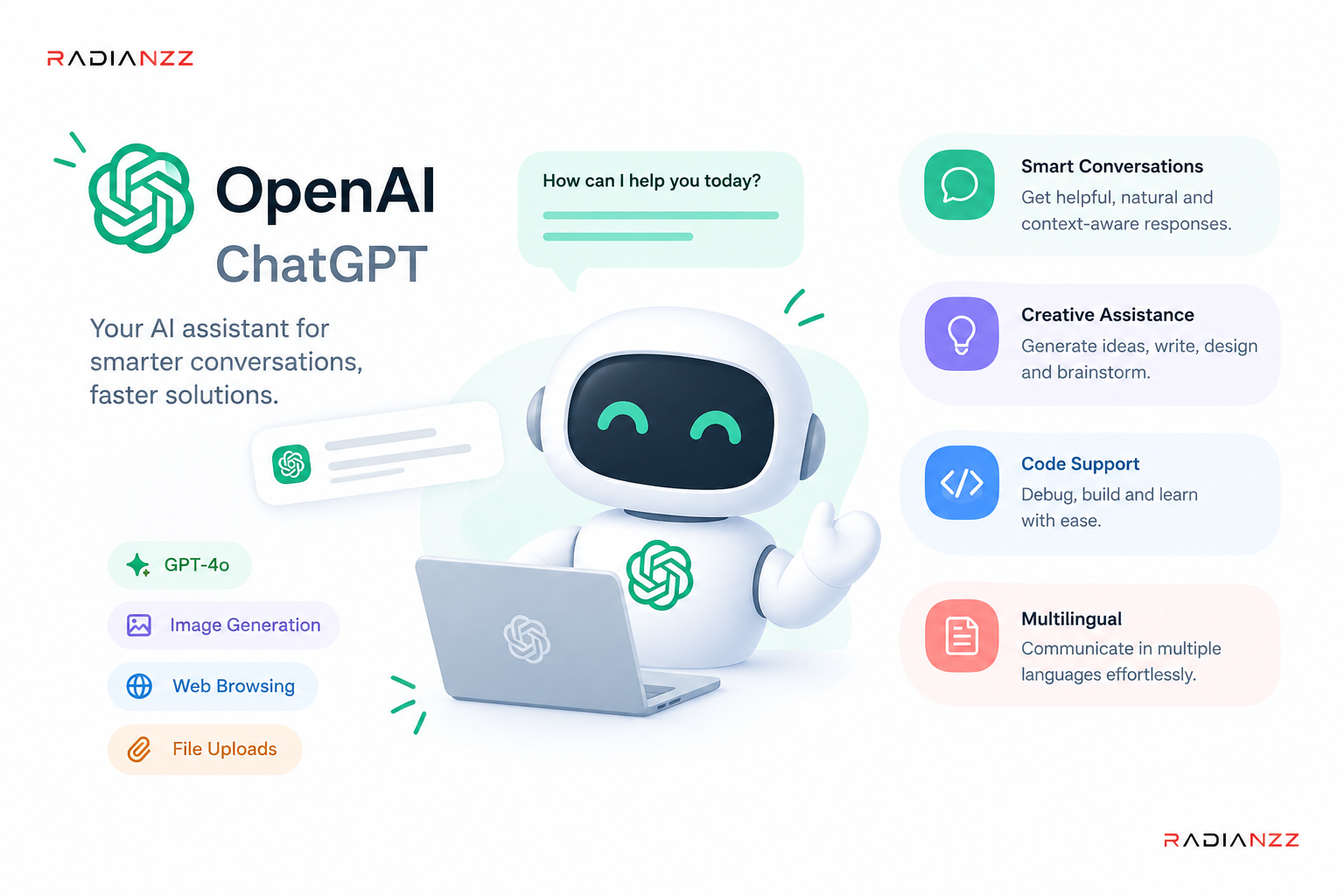
For a company that wants a chatbot embedded in its own website or application, Radianzz can connect an AI model to the user interface and business systems through web and API development. OpenAI's API is a flexible foundation for building branded assistants inside websites, apps, CRM systems and internal tools. Developers can combine a language model with company documents, function calling and external services. This is a good fit when a business wants control over the user experience and the actions an assistant can take.
Key features and use cases
Natural-language conversations and contextual responses.
Tool/function calling to retrieve records, create tickets or trigger approved workflows.
Structured outputs for predictable data capture, such as lead details or order references.
Model options for different balances of cost, latency and capability.
Useful for product discovery, lead qualification, internal knowledge search and customer self-service.
API pricing
Official OpenAI pricing lists the following standard rates per one million tokens for selected models:
Model | Input USD / INR | Output USD / INR | Cached input USD / INR |
GPT-6 Luna | $0.10 / ₹9.41 | $0.50 / ₹47.05 | $0.01 / ₹0.94 |
GPT-6.1 Terra | $1.00 / ₹94.10 | $5.00 / ₹470.50 | $0.05 / ₹4.71 |
GPT-6.1 Sol | $2.00 / ₹188.20 | $10.00 / ₹941.00 | $0.10 / ₹9.41 |
GPT-6 Astra | $10.00 / ₹941.00 | $50.00 / ₹4,705.00 | $1.00 / ₹94.10 |
These are API rates, not ChatGPT subscription prices. Model availability, context length, processing tier and tool usage can affect the final bill. Confirm the selected model's current rate before deployment.
Pros
highly flexible
strong developer ecosystem
can be integrated with business systems.
Cons
requires implementation, knowledge grounding and ongoing evaluation
usage costs scale with traffic.
Official links: https://openai.com/api/ | https://developers.openai.com/api/docs/pricing
2. Anthropic Claude API – Best for document-heavy knowledge assistants
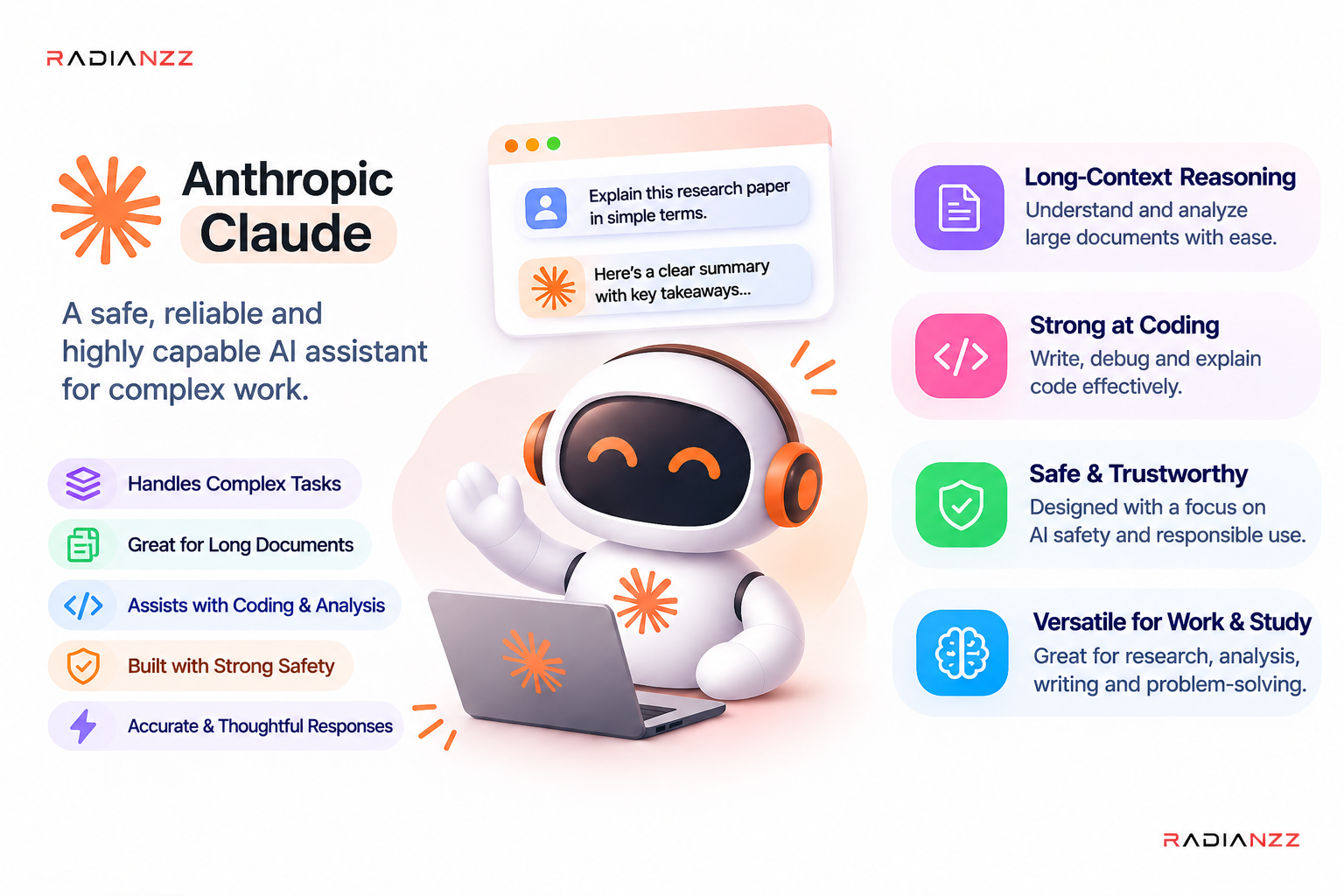
A Radianzz-style implementation could use this approach to turn approved company documents, service information and internal policies into a searchable knowledge assistant, with access controlled by the business. Claude is well suited to assistants that must read and reason over long documents, policies, technical material and business knowledge. Developers can connect it to approved knowledge sources and tools, then expose it through a website or internal application.
Key features and use cases
Long-context document analysis and summarisation on supported models.
Tool use for controlled interaction with external systems.
Prompt caching to reduce repeated-context costs.
Useful for policy assistants, research support, technical documentation and complex service queries.
API pricing
Anthropic's November 9, 2026 list-price card shows the following global standard rates for Claude Sonnet 5.5:
Charge | USD per 1M tokens | Approx. INR per 1M tokens |
Input | $2.00 | ₹188.20 |
Output | $10.00 | ₹941.00 |
5-minute cache write | $2.50 | ₹235.25 |
1-hour cache write | $4.00 | ₹376.40 |
Cache read / hit | $0.10 | ₹9.41 |
Claude consumer plans are billed separately and do not constitute API credit bundles. Rates differ by model and processing tier; verify the chosen model's current rate card.
Pros
strong document and reasoning workflows
caching options
useful for knowledge assistants.
Cons
requires integration work
model costs vary
not a complete helpdesk by itself.
Official links: https://platform.claude.com/docs/en/about-claude/pricing | https://platform.claude.com/docs/
3. Google Gemini API – Best for model choice and cost control
For businesses already using Google's ecosystem, Radianzz can assess where a Gemini-powered assistant fits into a wider AI and automation workflow. Gemini provides developers with several model families and Google Cloud integrations. The ability to select different model tiers helps teams balance response quality, speed and cost. It is useful for multimodal applications and custom assistants that need to work with text, images or other supported input types.
Key features and use cases
Multiple model tiers for different workloads.
Function calling and structured output support on supported models.
Multimodal input capabilities, depending on model.
Integration with Google AI and Google Cloud services.
Useful for product support, document processing, lead intake and app-based assistants.
API pricing
Gemini API rates vary by model, context size, modality, free/paid tier and optional services such as grounding or caching. Do not apply one model's rate to the entire Gemini family. Use Google's live pricing table for the exact model and tier selected; the INR equivalent can be calculated at the reference rate of ₹94.10 per USD.
Pros
broad model selection
multimodal options
integration with Google's ecosystem.
Cons
pricing is model-specific
additional services can add charges
production setup still requires engineering.
Official links: https://ai.google.dev/gemini-api/docs/pricing | https://ai.google.dev/gemini-api/docs
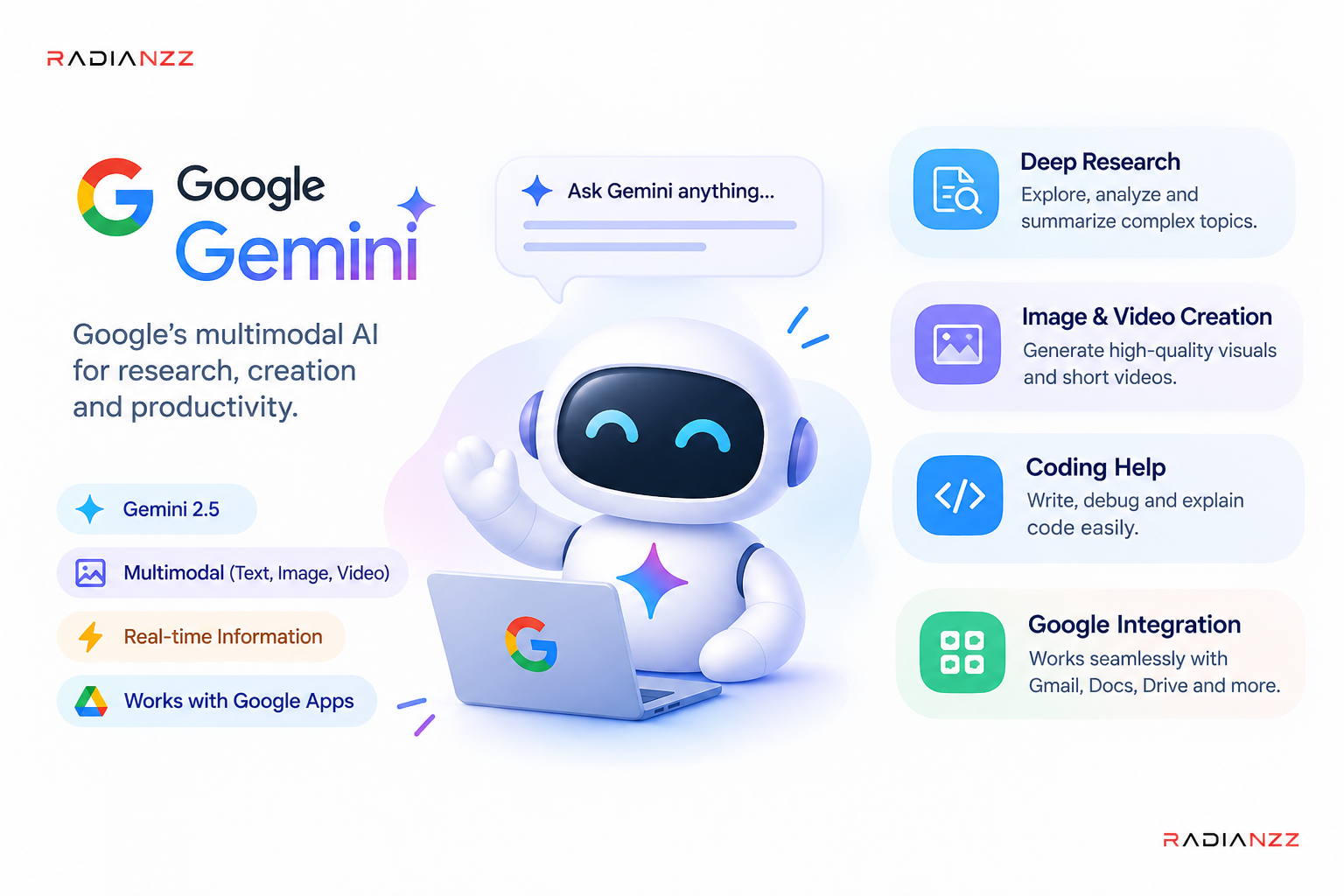
4. Microsoft Copilot Studio – Best for Microsoft-based organisations
Radianzz can help map these agent workflows to a company's existing website, applications and operational processes before implementation. Copilot Studio is a low-code environment for building agents that connect to business data and workflows. It is especially relevant to organisations already using Microsoft 365, Teams, SharePoint, Dynamics 365 and Power Platform.
Visual agent authoring and knowledge sources.
Power Automate actions and custom connectors.
Deployment into supported Microsoft channels and websites.
Useful for employee helpdesks, HR policy assistants and workflow automation.
Pricing
Microsoft's published India pricing lists a 25,000 Copilot Credit capacity pack at ₹16,640 per month (approximately $176.83 at the reference exchange rate). Pay-as-you-go billing is also available through Azure. Credit consumption depends on the type of agent operation; do not equate one credit with one message.
Pros
low-code authoring
deep Microsoft integration
workflow automation.
Cons
credit consumption can be difficult to forecast
strongest fit is for Microsoft-centric organisations.
Official links: https://www.microsoft.com/en-in/microsoft-365-copilot/pricing/copilot-studio | https://learn.microsoft.com/en-us/microsoft-copilot-studio/
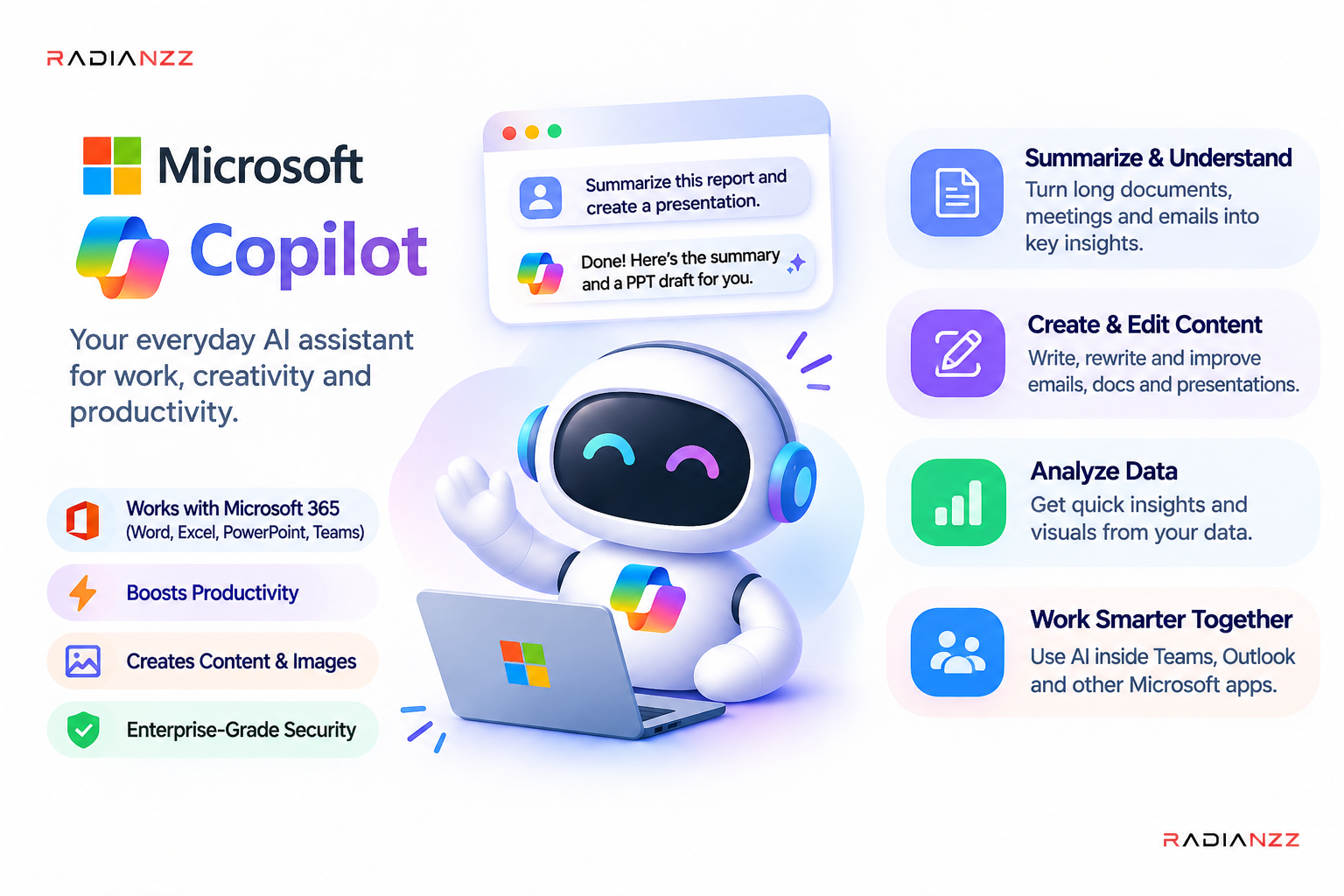
5. Salesforce Agentforce – Best for CRM and sales automation
Where Salesforce is the system of record, Radianzz role would be to help define the integration scope, customer journey and supporting digital experience—not to replace the CRM. Agentforce is designed for AI agents that use Salesforce data and business processes. It is most relevant when a chatbot must do more than answer questions—for example, qualify a prospect, retrieve account context or initiate a controlled CRM workflow.
Agents grounded in Salesforce CRM data.
Actions and workflows connected to Salesforce processes.
Tools for sales, service and employee-facing scenarios.
Useful for lead routing, case support and account-related assistance.
Pricing
Salesforce offers multiple Agentforce pricing approaches, including consumption-based Flex Credits and conversation-based options. Published prices and entitlements depend on the selected edition, product bundle and contract. Because these options are not interchangeable, obtain a current quote and model expected actions or conversations before comparing total cost. Do not treat a Salesforce CRM Licence as an Agentforce API allowance.
Pros
strong CRM context
useful for sales and service operations
workflow actions.
Cons
ecosystem dependence
implementation and licensing complexity
usage costs need modelling.
Official links: https://www.salesforce.com/in/agentforce/pricing/ | https://developer.salesforce.com/
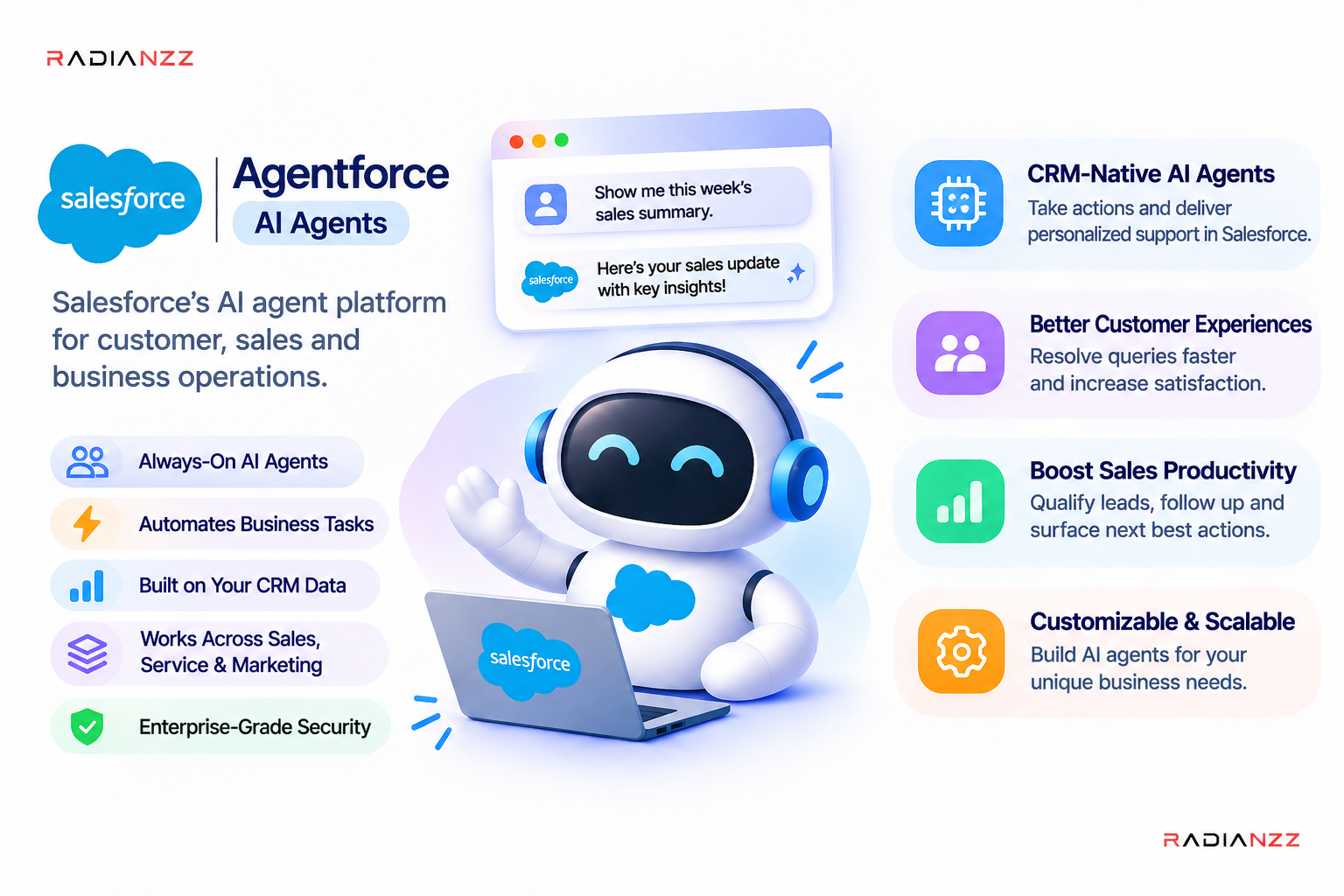
6. Zendesk AI Agents – Best for customer support teams
For organisations that need a connected customer journey, Radianzz can also review how support automation fits alongside website development and other digital services. Zendesk combines helpdesk ticketing, customer conversations and AI automation. It suits support teams that need to automate common questions while retaining ticket management and escalation to human agents.
AI-assisted customer service and automated responses.
Ticketing, routing and knowledge-base workflows.
Human-agent escalation and support operations.
Useful for SaaS support, order enquiries and service request triage.
Pricing
Zendesk's annual-billing Suite Team list price is $55 per agent per month (approximately ₹5,176.55). This is a per-agent suite subscription, not a standalone API token price. Higher plans, add-ons and AI-specific usage may increase the total. Confirm current regional pricing and the exact AI agent entitlement.
Pros
integrated ticketing and support workflows
human escalation
established helpdesk ecosystem.
Cons
per-agent costs
add-ons and advanced capabilities can increase spend
may be more than a small team needs.
Official links: https://www.zendesk.com/pricing/ | https://developer.zendesk.com/
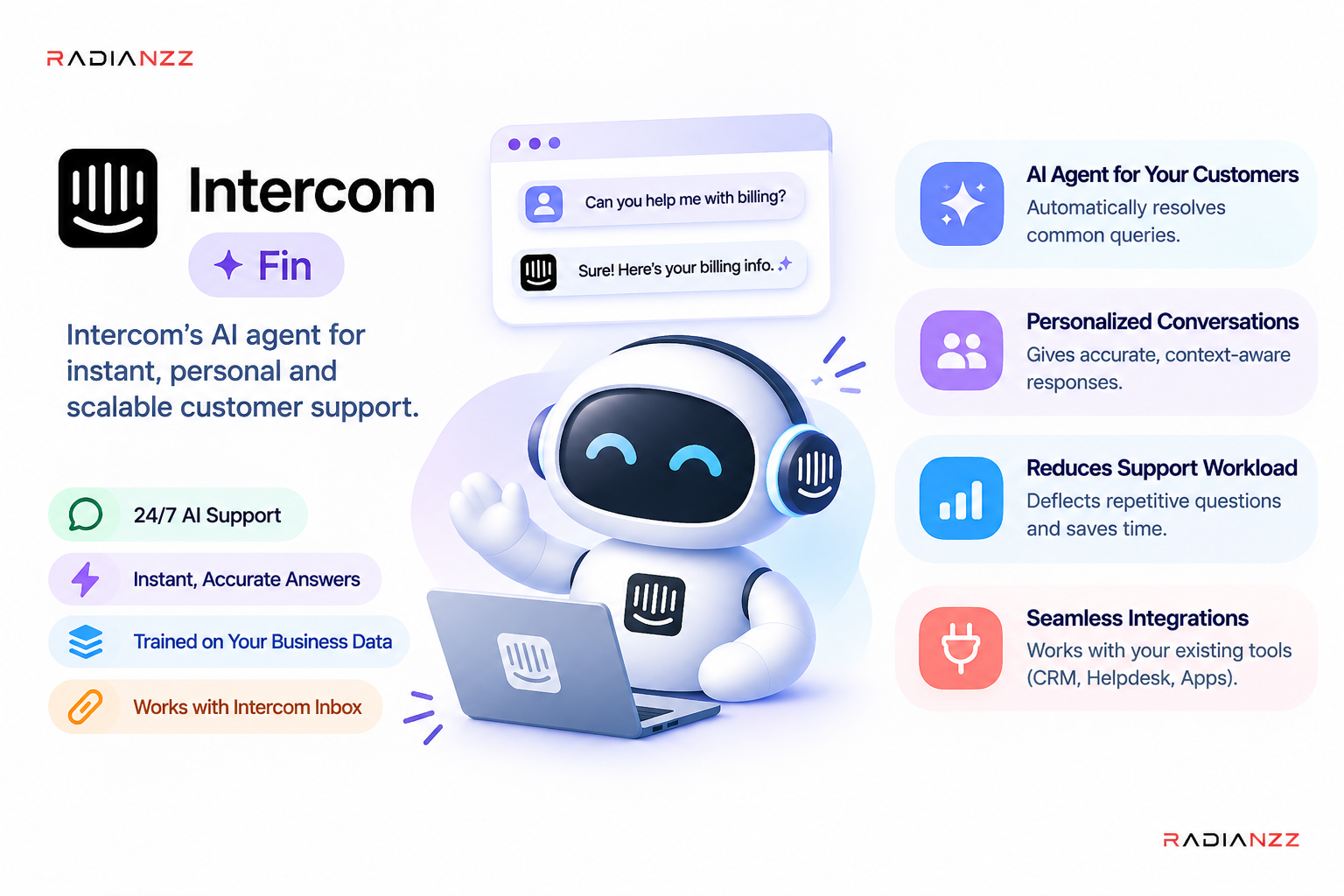
7. Intercom Fin – Best for AI customer-service resolution
A Radianzz implementation assessment should estimate expected successful resolutions, human handoffs and the associated per-outcome spend before launch. Fin is Intercom's AI customer service agent. It uses business knowledge and connected workflows to resolve customer questions, with a route to human support when needed. Its outcome-based model makes it important to understand what the provider counts as a successful resolution.
Answers based on approved company content.
Automated support workflows and handoff to people.
Customer service integrations and developer APIs.
Useful for subscription support, account questions and common e-commerce enquiries.
Pricing
Intercom publishes Fin AI Agent pricing at $0.99 per successful outcome (approximately ₹93.16). Intercom seat subscriptions are separate; published annual-billing examples include Essential at $29/seat/month (₹2,728.90), Advanced at $85 (₹7,998.50) and Expert at $132 (₹12,421.20). The final cost depends on seats, successful outcomes, channels and any applicable plan conditions.
Pros
outcome-based measure
purpose-built support workflows
human handoff.
Cons
per-outcome fees add up at volume
seat subscriptions are additional
outcome definitions matter.
Official links: https://www.intercom.com/pricing | https://www.intercom.com/help/en/articles/8205718-fin-ai-agent-outcomes | https://developers.intercom.com/
8. Botpress – Best for custom chatbot development
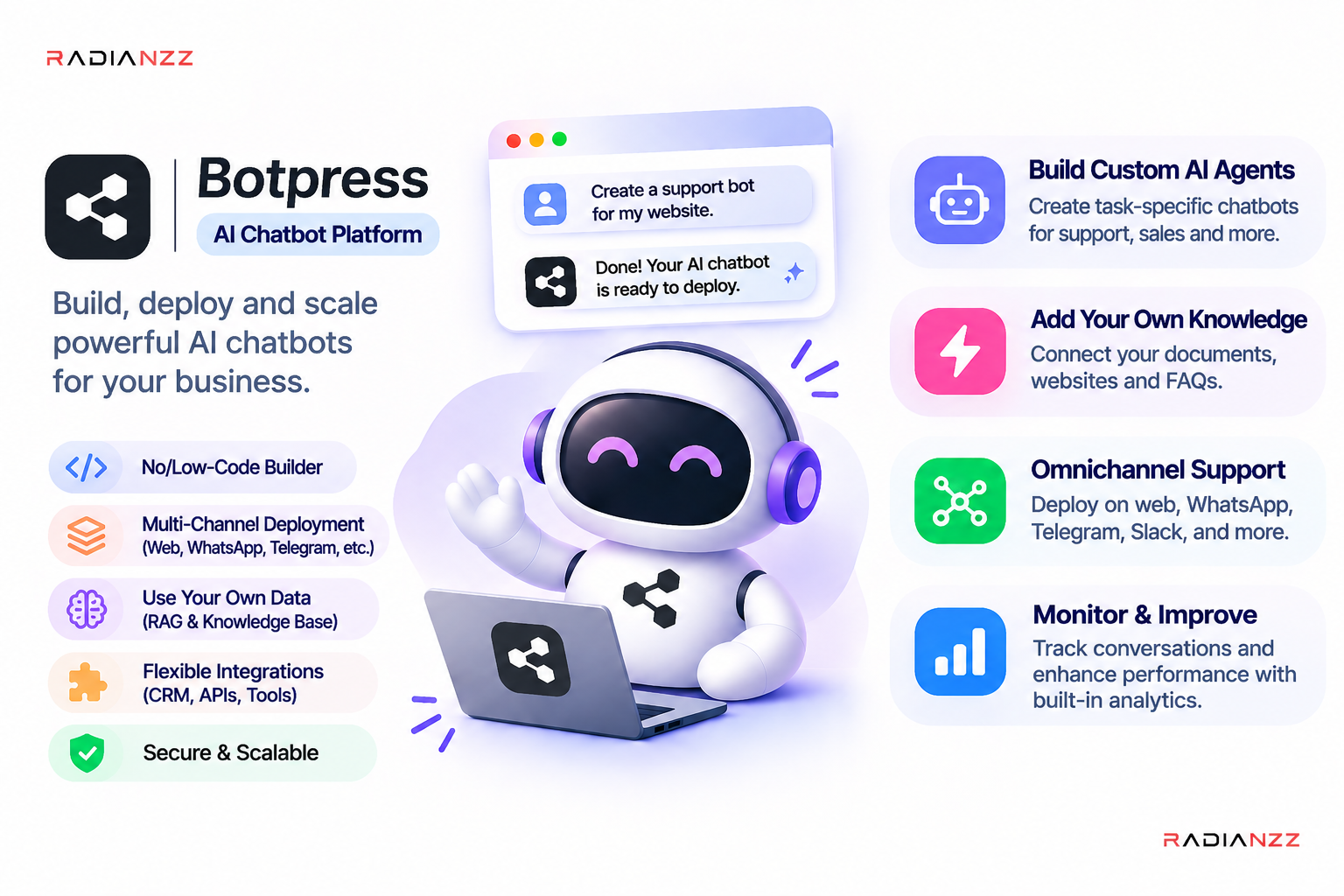
This is particularly relevant to an agency-led build: Radianzz can scope the chatbot experience, knowledge sources, integrations and website deployment as one connected project. Botpress provides a visual environment for building AI agents with knowledge sources, workflows and integrations. It is relevant to agencies, developers and businesses that need a tailored chatbot without assembling every component from scratch.
Visual agent and workflow builder.
Knowledge-base connections and integrations.
API and developer tools for custom applications.
Useful for agency client projects, lead qualification and service assistants.
Pricing
Botpress publishes a Free plan and paid tiers. Its Plus plan is listed at $150 per month with annual billing (approximately ₹14,115). Team is listed at $750 per month with annual billing (approximately ₹70,575). Conversation allowances, AI spend and add-on usage depend on the plan. Confirm the current pricing page for exact included limits before purchase.
Pros
flexible visual builder
supports custom workflows
suitable for agencies and developers.
Cons
complex agents need design and testing
conversation/AI usage limits require monitoring
higher plans cost more.
Official links: https://botpress.com/pricing | https://botpress.com/docs
9. Tidio Lyro – Best for small business customer support
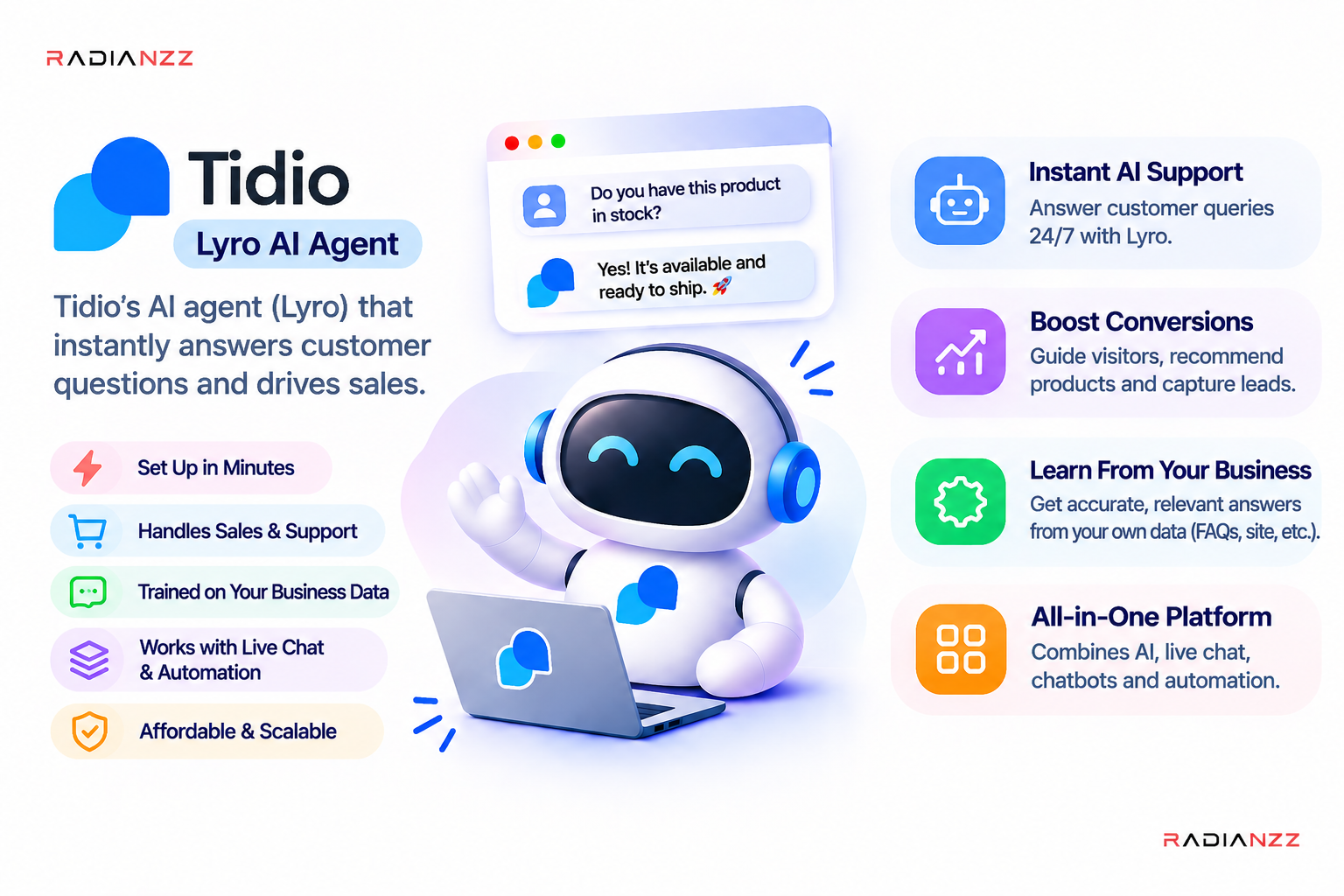
For a small e-commerce business, Radianzz can help connect the support experience with the storefront and lead-generation journey rather than treating the chat widget as an isolated tool. Tidio combines website live chat with customer support automation. Lyro is its AI agent product, intended to answer customer questions using business information and route conversations to people when necessary. It is aimed at businesses that want a quicker route to a website support assistant.
Website chat widget and live-agent support.
AI answers based on business knowledge.
Human handoff and support workflow features.
Useful for small e-commerce stores and service-business FAQs.
Pricing
Tidio's pricing is package- and usage-dependent. The provider offers a free entry tier with limited conversations and paid subscriptions; Lyro AI Agent capacity is separately limited by the selected package. Because promotional pricing, conversation volumes and regional billing can change, check the live pricing configurator rather than relying on a single headline price. Tidio does not sell Lyro as a general-purpose token-priced foundation-model API.
Pros
accessible setup
combines live chat and AI
useful for smaller stores.
Cons
usage allowances are capped
advanced custom workflows may be limiting
scaling can increase subscription costs.
Official links: https://www.tidio.com/pricing/ | https://www.tidio.com/ai-agent/
10. Amazon Lex – Best for voice and text conversational systems
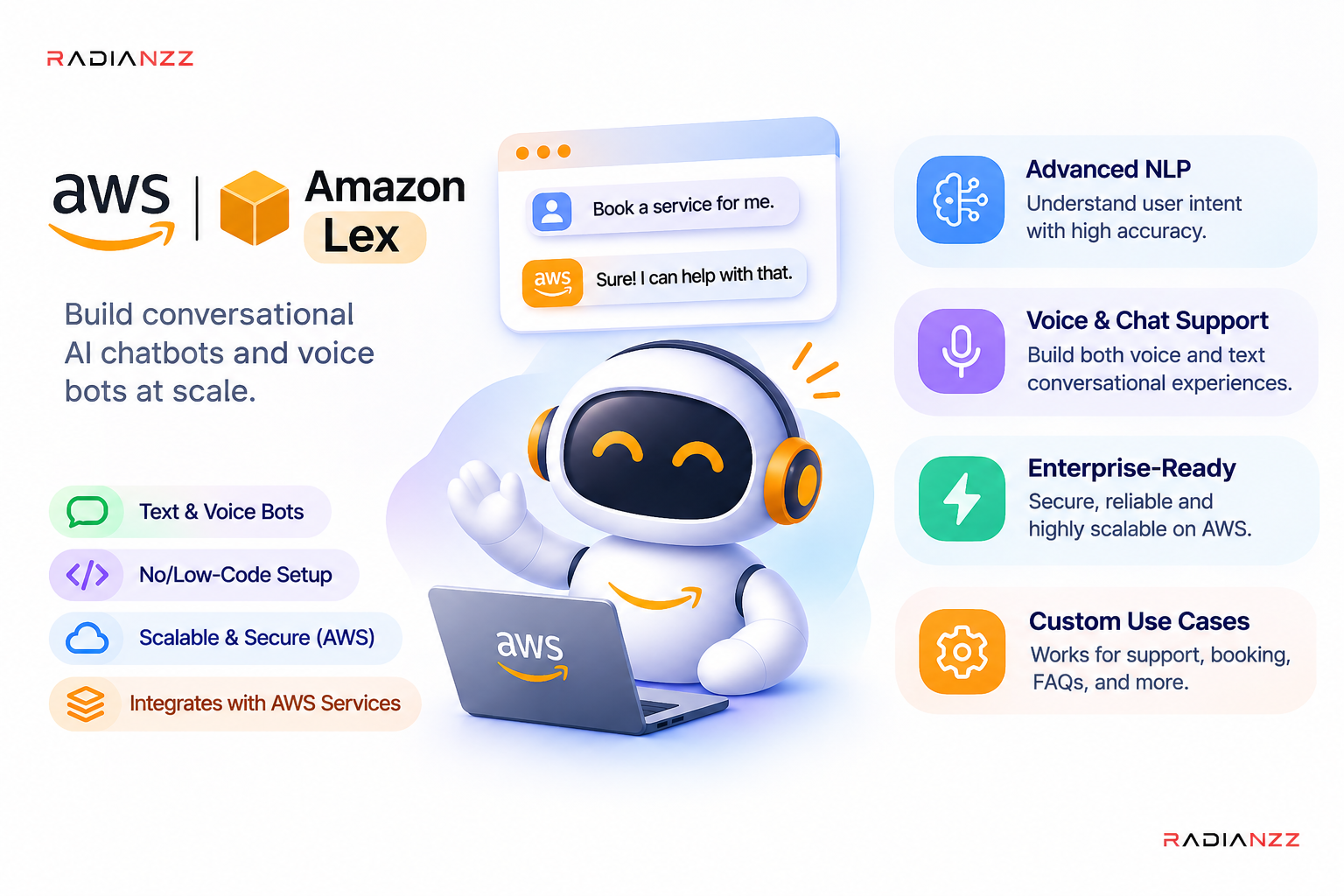
Radianzz can help plan the surrounding application and API layer, while AWS handles the managed conversational service and its usage billing. Amazon Lex is an AWS service for building voice and text conversational interfaces. It is a developer-oriented service rather than a turnkey helpdesk product. It works well when the business needs a custom conversational experience connected to AWS services such as Lambda or Amazon Connect.
Speech and text conversational interfaces.
Intent and slot recognition.
Integration with AWS Lambda and Amazon Connect.
Useful for voice support, booking flows and automated service triage.
Pricing
Amazon Lex lists standard request-based pricing of $0.00075 per text request (approximately ₹0.0706) and $0.004 per speech request (approximately ₹0.3764). Other AWS services used by the solution—such as Lambda, storage, telephony or contact-centre infrastructure—are billed separately.
Pros
usage-based billing
voice and text support
strong AWS integration.
Cons
requires development and cloud configuration
total solution cost includes connected AWS services.
Official links: https://aws.amazon.com/lex/pricing/ | https://docs.aws.amazon.com/lexv2/
AI chatbot API pricing comparison
The table below separates three costs that are often confused: free access for testing, paid consumer or SaaS subscriptions for people using a ready-made product, and developer/API charges for embedding AI into a business website or application. Prices are public list-price examples where available; usage, billing term, region, taxes and negotiated enterprise terms can change the total.
Free vs paid subscription vs API pricing: all 10 platforms
Platform | Free access | Paid product / subscription | API / usage pricing | What the business is actually paying for |
OpenAI / ChatGPT | ChatGPT has a free consumer tier with usage limits. | ChatGPT Plus is commonly listed at $20/month (about ₹1,882); business and enterprise plans are separate. This is a user subscription, not API credit. | API billed separately by model and tokens. Existing model table in this article lists GPT-6 Luna from $0.10 input / $0.50 output per 1M tokens; verify model availability and live rates before publication. | A person using ChatGPT vs a company embedding a model in its own product. |
Anthropic / Claude | Claude offers free consumer access in supported regions, with usage limits. | Claude Pro has been listed around $20/month monthly or lower on annual billing in some markets; check the India checkout price and current plan terms. | Claude API is separate. Current rate-card example: Sonnet 5.5 $2 input / $10 output per 1M tokens; Haiku 5.5 $0.10 / $0.50 for up to 100K context; Opus 5.5 $4 / $20. INR at ₹94.10/USD: Sonnet ₹188.20 / ₹941; Haiku ₹9.41 / ₹47.05; Opus ₹376.40 / ₹1,882. | Consumer chat access vs model inference for a custom assistant; API spend depends on input/output volume and caching. |
Google Gemini | Gemini consumer access includes a free tier with model and usage limits. | Google AI Pro has been listed at about $19.99/month (about ₹1,881); plan names, India pricing and included benefits can vary by market. | Gemini API has a free tier for selected models/quotas and paid, model-specific token rates. Grounding, caching, context size and modality can add charges; use Google's live model price table rather than a single family-wide figure. | A Gemini app subscription is not an API wallet. Developers pay according to the exact model and services called. |
Microsoft Copilot Studio | No equivalent unrestricted free production tier; trial/limited access may be offered under Microsoft's current terms. | India published capacity-pack example: 25,000 Copilot Credits at ₹16,640/month (about $176.83); pay-as-you-go is also available through Azure. | Not a simple token API price. Consumption is measured in Copilot Credits or Azure pay-as-you-go meter; connector, Power Platform and other Microsoft licensing may be additional. | Agent capacity/credits and Microsoft ecosystem licensing, rather than a consumer chatbot subscription. |
Salesforce Agentforce | Trial/demo access may be available; do not treat it as a free production entitlement. | Pricing depends on Salesforce edition, add-ons and selected Agentforce package; obtain a quote for the organisation's existing Salesforce estate. | Consumption-based Flex Credits and conversation-based pricing options may apply. Confirm current SKU, credit conversion and included entitlements with Salesforce. | CRM agent usage plus the underlying Salesforce licences and implementation. |
Zendesk AI Agents | Typically trial/demo rather than a broad free production plan. | Suite Team example: $55/agent/month on annual billing (about ₹5,176.55); higher tiers, AI add-ons and regional pricing can change total. | AI agent charges and automated-resolution allowances depend on plan and usage. Zendesk's API access is not equivalent to a foundation-model token price; check the contract and AI usage meter. | Helpdesk seats, ticketing suite and AI resolutions/automation. |
Intercom Fin | Usually trial/demo access rather than an unrestricted free production plan. | Intercom seat plans: Essential $29/seat/month, Advanced $85, Expert $132 on annual-billing examples (about ₹2,728.90 / ₹7,998.50 / ₹12,421.20). | Fin: $0.99 per successful outcome (about ₹93.16), in addition to applicable seat subscription and any other charges. | Human-agent seats plus a fee when Fin successfully resolves a customer conversation. |
Botpress | Free plan with limited monthly conversation/AI usage. | Published examples in this article: Plus $150/month (about ₹14,115) and Team $750/month (about ₹70,575), annual billing; check current plan limits. | AI usage is billed through the platform's usage/credit system and may be additional to the subscription. Botpress is a chatbot platform, not a single fixed token API rate. | Builder/workspace subscription, conversation allowance and AI model usage. |
Tidio Lyro | Free Tidio entry plan with limited live-chat/conversation capacity; AI-agent allowance is limited or separately packaged. | Paid Tidio plans vary by seats and conversation volume; Lyro AI Agent packages are based on the selected AI conversation allowance. Check live checkout for current quote. | Lyro is generally priced by AI conversation allowance/package rather than a public per-token API rate. External model/API usage should not be assumed included unless stated in the selected plan. | Live-chat seats and AI conversation capacity, not raw LLM tokens. |
Amazon Lex | AWS Free Tier/trial eligibility may apply to new accounts and eligible usage; it is time- and quota-limited. | No conventional monthly chatbot subscription. Pay for requests and related AWS services. | Example rates: $0.00075 per text request (about ₹0.0706) and $0.004 per speech request (about ₹0.3764). Lambda, Connect, telephony, storage and other AWS services are billed separately. | Per-request conversational processing plus the cloud infrastructure around the bot. |
Important: the consumer subscription prices above are indicative public-plan references, not a promise of current India checkout pricing. Several chatbot vendors do not publish a standalone API price because they bill by seat, credit, conversation or successful resolution. For those products, the relevant figure is the vendor's usage meter—not a made-up token equivalent. Confirm all figures on the official pricing page immediately before publishing.
How Radianzz can help: Radianzz can assess whether a business should use a ready-made SaaS chatbot or build a custom assistant, then scope the website widget, API integration, knowledge base, CRM/e-commerce connection, automation rules and analytics. Explore AI & Automation, API and Headless Systems and Radianzz services .
Token-based APIs and packaged chatbot subscriptions should not be ranked as if they were the same product. The first group charges for model processing; the second may charge per seat, conversation, action or successful outcome.
Provider / model | Input rate | Output rate | Billing unit |
OpenAI GPT-6 Luna | $0.10 (₹9.41) / 1M tokens | $0.50 (₹47.05) / 1M tokens | Tokens |
OpenAI GPT-6.1 Terra | $1.00 (₹94.10) / 1M tokens | $5.00 (₹470.50) / 1M tokens | Tokens |
Claude Sonnet 5.5 | $2.00 (₹188.20) / 1M tokens | $10.00 (₹941.00) / 1M tokens | Tokens |
Gemini API | Model/tier-specific | Model/tier-specific | Tokens and optional services |
Amazon Lex | Not token-based | Not token-based | $0.00075 (₹0.0706) per text request; $0.004 (₹0.3764) per speech request |
For a custom chatbot, estimate monthly input and output tokens separately. For a managed support product, estimate agent seats, conversations, successful resolutions, credit consumption and add-ons. Always include hosting, integration, monitoring, taxes and human escalation in the total cost of ownership.
Best AI chatbots by business use case
Business requirement | Shortlist | Why |
Custom website/app assistant | OpenAI, Gemini, Claude, Botpress | APIs and flexible integrations |
Internal knowledge assistant | Claude, OpenAI, Copilot Studio | Document and enterprise knowledge workflows |
Microsoft 365 automation | Copilot Studio | Native Microsoft ecosystem connections |
CRM and sales operations | Salesforce Agentforce | CRM context and controlled actions |
Customer support helpdesk | Zendesk, Intercom Fin | Tickets, handoff and support workflows |
Small e-commerce support | Tidio Lyro | Website chat and FAQ automation |
Voice support on AWS | Amazon Lex | Voice and text interfaces with AWS services |
Free vs paid AI chatbots: what should a business choose?
Free tiers are useful for testing a concept, validating a prompt or running a low-volume prototype. They often impose message, conversation, model or feature limits. Paid plans are more appropriate when a chatbot becomes a customer-facing business system and needs reliable capacity, analytics, integrations, team controls, security options and support.
A free plan may be enough for a basic FAQ experiment. Upgrade when customer volume grows, the assistant must access live business systems, or response failures have a measurable commercial cost. Before upgrading, calculate the cost per resolved enquiry rather than looking only at the monthly headline price.
How to choose the best AI chatbot for your business
Define the job: customer support, lead qualification, internal knowledge, sales assistance or voice automation.
Map the systems it must connect to: CRM, website, e-commerce platform, ticketing, inventory, payments or messaging.
Check the data model: what information can the bot read, change or send, and what permissions are required?
Estimate total cost: API tokens, seats, outcomes, credits, hosting, integration, maintenance and taxes.
Set escalation rules: specify when the bot must stop, explain uncertainty and transfer the case to a person.
Test with real queries: measure factual accuracy, resolution rate, handoff rate, latency and cost per resolution.
Review privacy and security: data retention, access controls, encryption, regional processing and contractual terms.
How Radianzz Helps Businesses Leverage AI Chatbots
Radianzz helps businesses identify, integrate, and implement AI chatbot solutions tailored to their needs. From website chatbot integration and API development to automated customer support, lead generation, and workflow automation, we help businesses turn AI technology into practical business solutions. Our goal is to reduce manual effort, improve customer engagement, and build smarter, more scalable digital experiences.