

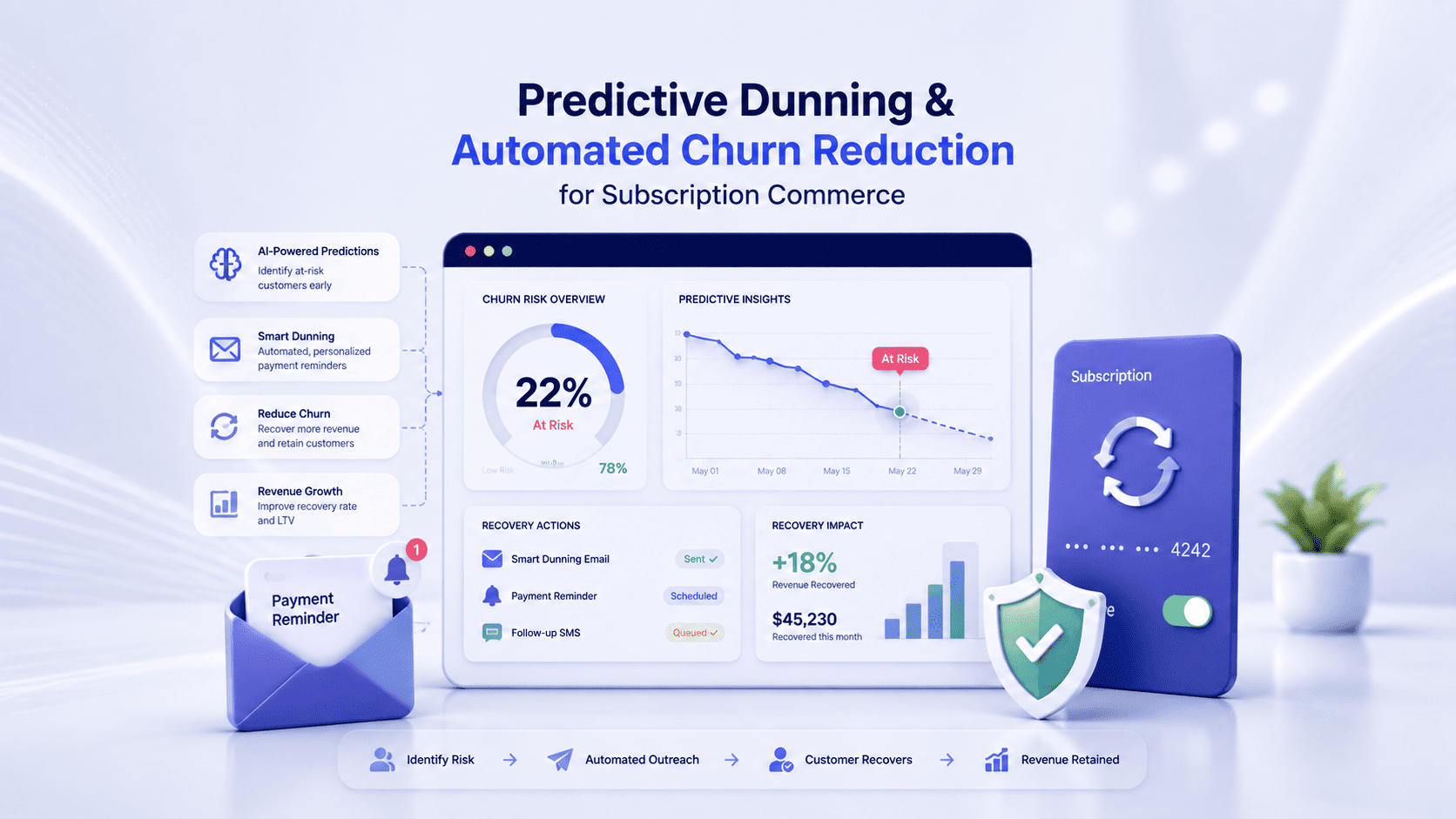
For recurring subscription businesses, involuntary churn caused by failed credit card transactions is one of the single largest threats to Monthly Recurring Revenue (MRR) growth. Standard credit card failure rates in subscription commerce range between 7% and 15% monthly, caused by expired card dates, temporary processing holds, insufficient credit balances, or false-positive fraud flags.
Relying on naive, fixed-interval billing retry models (e.g., retrying a card every 24 hours) fails to recover maximum revenue and often accelerates customer churn. Implementing an automated, predictive dunning engine driven by machine learning retry models, dynamic account updater APIs, and tokenized SMS/Email recovery workflows allows subscription brands to recover 35% or more of failed recurring transactions.
Dissecting Involuntary Churn: Hard Declines vs. Soft Declines
To build an efficient payment recovery engine, your billing platform must analyze raw credit card response codes returned by payment gateways (Stripe, Adyen, Authorize.net) and route recovery logic accordingly.
Decline Types and Recovery Rules
Hard Declines (Unrecoverable directly): Codes indicating lost cards, stolen cards, or closed bank accounts. Retry attempts will continuously fail and incur gateway penalty fees. Recovery requires direct customer interaction to input new payment details.
Soft Declines (Recoverable automatically): Temporary errors caused by insufficient funds, processor network timeouts, or daily velocity limits. These transactions are highly recoverable if retried at the optimal time.
Mechanics of Predictive Payment Retries
Standard dunning engines attempt card retries on rigid schedules (e.g., Day 1, Day 3, Day 7). Predictive dunning replaces fixed schedules with machine learning retry models that analyze card-level processing metadata
Key Variables Analyzed
Issuing Bank Settlement Windows: Debit cards and consumer credit cards show varying authorization success rates based on local payday schedules (e.g., 1st and 15th of the month) and time of day.
Optimal Hour Execution: Machine learning retry algorithms identify when an issuing bank experiences low fraud-filtering sensitivity, executing retries during optimal processing windows (often early morning hours).
Card Account Updater (CAU) Integration: Before executing retries, the billing engine checks Card Account Updater APIs (Visa VAU / Mastercard ABU) to retrieve updated card numbers and expiration dates for re-issued cards automatically.
Frictionless Customer Re-engagement Workflows
When soft retries fail and direct customer action is required, traditional login prompts introduce friction. Forcing a customer to recall passwords, log into an account portal, and manually navigate to billing settings results in high drop-off rates.
Friction-Reduction Protocols
Passwordless Authentication: The customer receives a secure SMS or Email containing an encrypted, single-use URL. Clicking the link takes them directly to a dedicated, secure payment update screen without requiring password entry.
Apple Pay / Google Pay Integration: The recovery interface natively supports Apple Pay and Google Pay, allowing customers to authorize updated payment credentials using biometric authentication in under 10 seconds.
Automated Dunning Escalation Sequence
Day 0: Transaction fails $\rightarrow$ Soft Retry Engine analyzes card response code.
Day 1–4: ML algorithm executes 2 smart retries at optimal bank processing hours.
Day 5: Soft retries fail $\rightarrow$ Tokenized SMS sent via SMS Gateway.
Day 8: Tokenized Email sent with Apple Pay fast-update portal.
Day 12: Subscription paused safely without deleting customer data profile.
Conclusion
Involuntary churn is a solvable engineering challenge for recurring subscription brands. Relying on basic retry schedules leaves substantial recurring revenue uncollected every month. By building an intelligent predictive dunning engine that categorizes decline codes, utilizes machine learning for optimal retry timing, leverages automated Card Account Updaters, and delivers friction-free tokenized update portals, subscription businesses can recover 35%+ of lost revenue and extend long-term customer lifetime value.